In the high-stakes world of Greater Seattle real estate, first impressions happen in a heartbeat. Whether it’s a modern build in Totem Lake or a classic waterfront estate in West Houghton, buyers on the Eastside have high expectations. They aren’t just looking for square footage; they are looking for a lifestyle that feels optimized, peaceful, and—above all—manageable.
Most sellers understand Surface Staging: the art of bringing in a velvet sofa, a neutral rug, and a few coffee table books to make a room look “editorial.” But in a market driven by tech-forward professionals and busy families, surface-level beauty is no longer enough to command top dollar.
To truly stand out, you need System Staging.
Kirkland is unique. Our neighbors are often high-achievers working at the forefront of tech and innovation. When these buyers walk into an open house, their brains are trained to look for efficiency. They aren’t just looking at the paint colors; they are subconsciously evaluating if this home can handle the pace of their lives.
Surface Staging creates an aesthetic. It tells a buyer, “This room is pretty.” System Staging creates a narrative of ease. It tells a buyer, “Your life will be better here.”
When a pantry is overflowing or a primary closet is a “jigsaw puzzle” of clothes, it sends a subtle but powerful signal to the buyer’s brain: “This house is too small.” Even if the home has 4,000 square feet, visual clutter creates a perception of space scarcity. System staging removes that friction, allowing the home’s true architecture to shine.
There is a psychological phenomenon in real estate where buyers “mirror” the energy of a home. If a home feels chaotic, the buyer feels stressed. If a home feels organized, the buyer feels a sense of relief.
A professionally organized home triggers the “Aspiration Trigger.” The buyer doesn’t just see a clean kitchen; they see a version of themselves who is calm, who meal-preps on Sundays, and who never loses their car keys. By hiring a professional organizer to “edit” the home before it hits the Northwest Multiple Listing Service (NWMLS), you aren’t just cleaning—you are selling a dream of a more disciplined, serene life.
Not every room needs a deep dive, but there are “The Big Three” areas where professional systems can directly influence an offer.
I. The Primary Closet: The “Boutique” Experience
In Kirkland, the primary suite is a sanctuary. However, a walk-in closet is only a luxury if the buyer can actually see the walls. We follow the “Visible Wall Rule.” We recommend a 30% reduction in volume before listing. When we edit a closet, we don’t just fold clothes; we color-code, use uniform hangers, and create “breathing room” between items. This transforms a storage space into a high-end boutique. It signals that the home has more than enough space for the buyer’s belongings.
II. The Kitchen & Pantry: The Heart of Efficiency
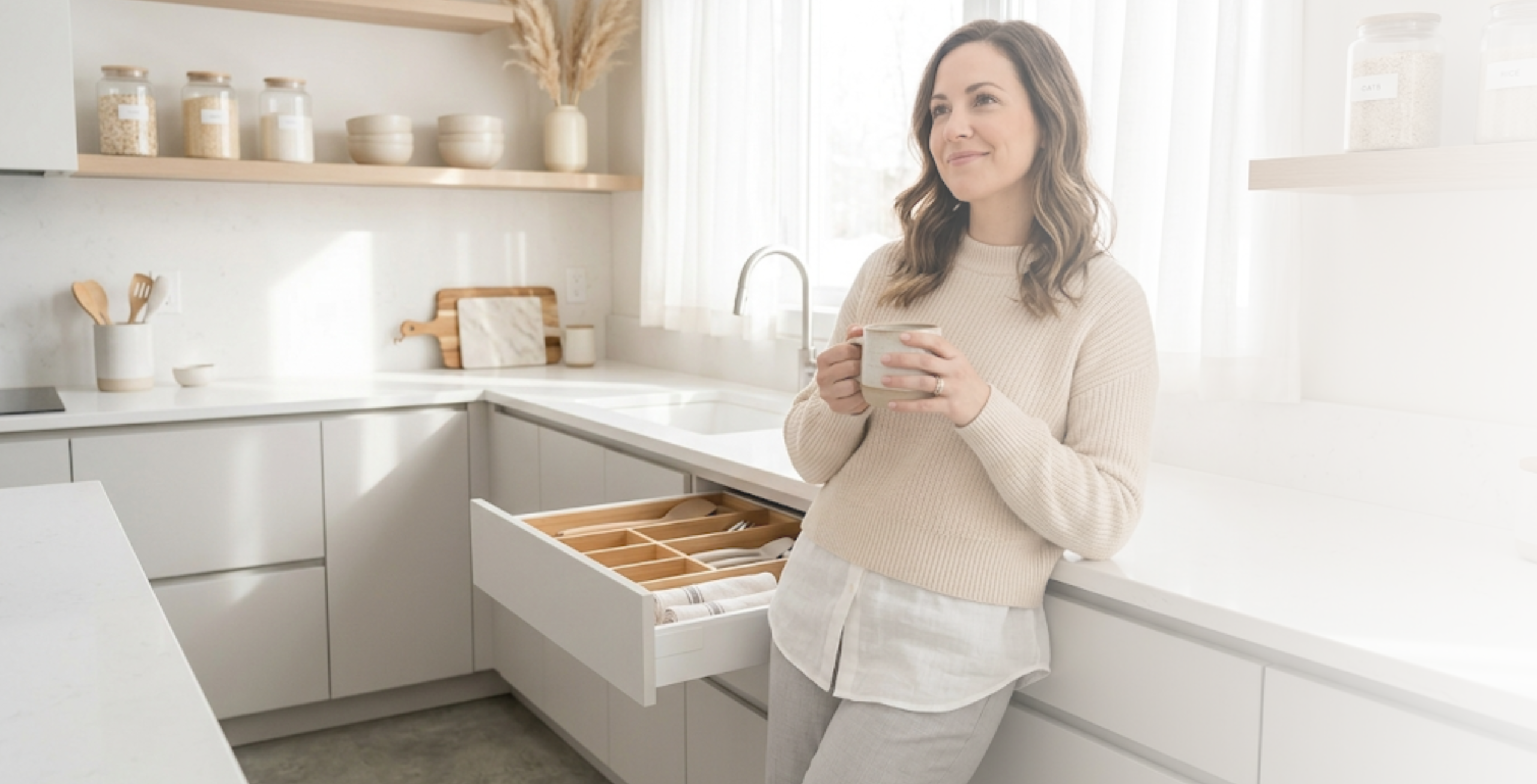
The kitchen is often the deciding factor in a sale. Buyers will open every drawer and every cabinet.
III. The Mudroom & Garage: The PNW Reality
In the Pacific Northwest, the mudroom is the “entry of truth.” With our rainy climate, a mudroom that lacks a system looks like a mess of wet boots and discarded coats. System staging here involves creating “Drop Zones.” When a buyer sees a perfectly organized mudroom, they see a solution to the “Seattle Rain” problem. It proves the home is functional for the local lifestyle.
For Real Estate Agents, suggesting a professional organizer to a client can be a delicate conversation, but it is one that pays off.
Should I declutter before or after I call a stager? A: Always before. A stager’s job is to beautify the space; an organizer’s job is to optimize it. If you stage over clutter, you’re just “decorating a problem.” We recommend an “Edit Day” at least one week before the furniture stagers arrive.
How long does the process take? A: For most Eastside homes, a “Pre-Listing Edit” can be completed in 1–3 days. We focus specifically on the high-traffic areas that buyers check during open houses.
Is professional organizing worth the investment for a home that is already modern? A: Absolutely. Modern homes often have “open” storage concepts. These look beautiful when curated but can look messy very quickly. We help maintain that “minimalist, airy” aesthetic that modern architecture demands.
For our Realtor partners: Share this checklist with your clients to help them prepare for photography and showings.
Final Thoughts: Making the Move Seamless
At Minimize & Organize, we believe that selling a home should be the start of a fresh chapter, not the climax of a stressful one. By implementing systems before the “For Sale” sign goes up, you aren’t just helping the sale—you’re helping the seller prepare for their own move.
Ready to give your listing the “System Staging” advantage? Let’s connect and create a minimalist, airy, and high-functioning space that Kirkland buyers can’t resist.
We use cookies to improve your experience on our site. By using our site, you consent to cookies.
Manage your cookie preferences below:
Essential cookies enable basic functions and are necessary for the proper function of the website.
These cookies are needed for adding comments on this website.
Statistics cookies collect information anonymously. This information helps us understand how visitors use our website.
Google Analytics is a powerful tool that tracks and analyzes website traffic for informed marketing decisions.
Service URL: policies.google.com (opens in a new window)
You can find more information in our Cookie Policy and .