If you’re living here on the Eastside, you know the drill. We love our Kirkland greenery, but it comes with a price: about nine months of gray skies and that persistent Seattle drizzle.
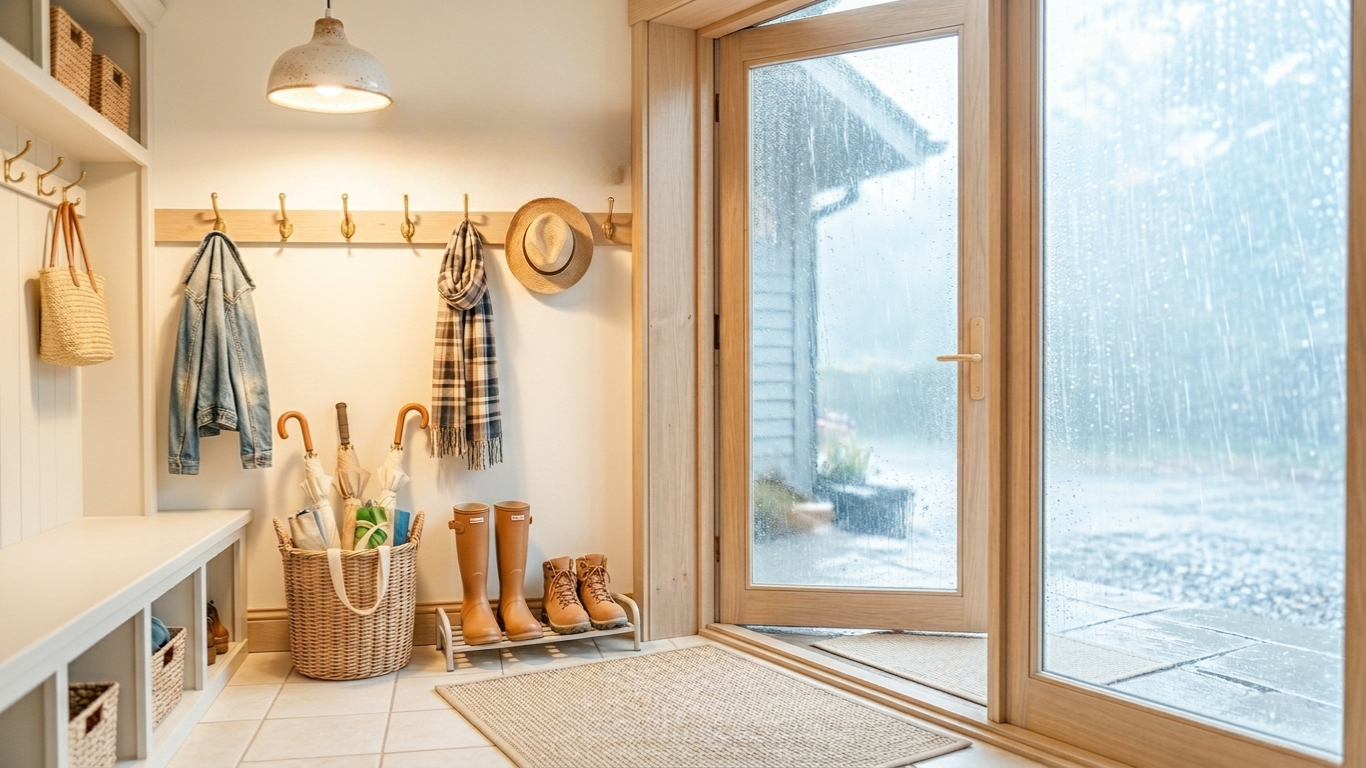
I see it all the time in the homes I visit—beautiful, multi-million dollar properties in West Houghton or Bridle Trails where the front entryway has become a battleground. It’s the “Seattle Shuffle”: trying to drop a wet umbrella, kick off muddy boots, and manage a grocery haul without letting the dampness “bleed” into your clean hardwood floors.
When your entryway is a mess, your whole day starts and ends with a spike in cortisol. I don’t just see a pile of coats; I see a broken system. Here’s how we architect a mudroom that actually stands up to the PNW lifestyle while keeping that refined, minimalist aesthetic we all crave.
In my design philosophy, the mudroom is the “filter” for your home. If the filter is clogged, the house feels chaotic. I like to break the entryway down into three distinct “Zones of Flow.”
This is your immediate “drop point.” This area has to be bulletproof.
Once you’ve shed the wet layer, you move into the interior transition.
This is the area closest to your living space. This is where your keys, sunglasses, and outgoing mail live. We keep this area strictly minimalist. It’s the last thing you see before you leave and the first thing you see when you get home. It should feel airy and prepared.
One mistake I see people make is buying airtight plastic bins for their shoes or gear. In the Pacific Northwest, that’s a recipe for mildew and odors.
When I’m sourcing for a project, I prioritize materials that breathe. I look for ventilated shelving and open-weave baskets. We want that high-end look, but we need the air to move. It’s about Functional Luxury—it has to look good, but it has to handle the reality of our weather.
I always tell my clients that an organized mudroom saves you about 15 minutes of “searching time” every morning. For a busy professional or a parent, that’s an extra cup of coffee or a calmer drive to school.
But there’s also the “Real Estate” factor. If you’re planning to list your home, the mudroom is the “entry of truth.” When a buyer walks in and sees a perfectly managed transition zone, they subconsciously think: “This house is well-maintained.” It builds immediate trust.
My “mudroom” is tiny. Am I stuck with the mess?
How do I handle the “Amazon Box” overflow in the entryway?
Is professional organizing worth it for a mudroom?
Think of it as an investment in your sanity. I don’t just “move things around.” I architect a workflow that fits your family’s specific rhythm. When the system is right, staying organized isn’t a chore—it’s just the natural state of the room.
I do this in my own home to make sure Monday morning doesn’t feel like a landslide:
The Wipe-Down: A quick 30-second wipe of the boot trays keeps the “mud” from
Most people try to “clean” their way out of a messy entryway. I’m here to tell you that you can’t clean your way out of a bad system.
At Minimize & Organize, we focus on designing the workflow first. When the architecture of your home matches the reality of your life (and our weather), everything else falls into place.
Ready to stop the “Seattle Shuffle” and start walking into a home that feels like a sanctuary? Let’s talk about building a system that works for you.
We use cookies to improve your experience on our site. By using our site, you consent to cookies.
Manage your cookie preferences below:
Essential cookies enable basic functions and are necessary for the proper function of the website.
These cookies are needed for adding comments on this website.
Statistics cookies collect information anonymously. This information helps us understand how visitors use our website.
Google Analytics is a powerful tool that tracks and analyzes website traffic for informed marketing decisions.
Service URL: policies.google.com (opens in a new window)
You can find more information in our Cookie Policy and .