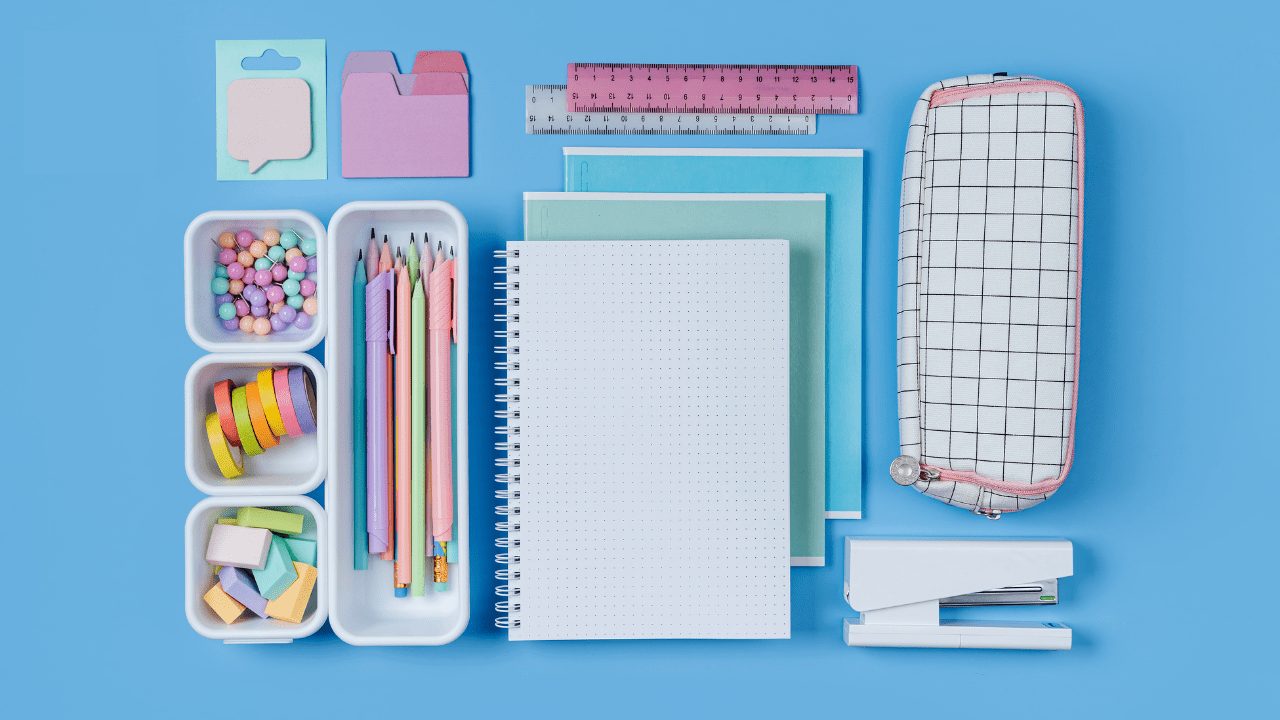
A calm start to the school year begins at the front door.
Aug 17
Every August, we get some version of the same phone call. School starts in a couple of weeks, and the family that’s calling is dreading it a little — not because anyone is disorganized, exactly, but because last September was a scramble of missing forms, one shoe, and a backpack nobody could find five minutes before the bus. They don’t want a Pinterest-perfect mudroom. They want mornings that don’t feel like a fire drill.
That’s what a command center actually solves. It isn’t a design trend — it’s a landing place. One spot in the house where the things a family needs to leave the door with actually live, so nobody is hunting for them at 7:40 in the morning. If you set one up now, before the first bell, it has time to become a habit instead of one more thing to maintain.
Before you buy a single bin, walk your own morning. Literally — stand at your front door and retrace the last chaotic morning you had. Where did the missing shoe turn up? Where did the field trip form get buried? Where does mail actually land in your house, versus where you wish it landed?
Most command center failures come from putting the system somewhere that looks nice instead of somewhere that matches how your family already moves. If your kids exit through the garage, a beautiful console table by the front door will never get used — it’s not on the path. The command center belongs wherever your family’s feet actually go on the way out.
You don’t need a wall of cubbies to make this work. Most Eastside homes we organize — whether it’s a Kirkland craftsman or a Redmond townhome — have room for this in an entryway closet, a stretch of mudroom wall, or even a single kitchen cabinet repurposed for the job. What matters is that these five categories each have a specific, visible home:
That’s it. Five categories, five specific homes. Adding more than that usually means the system collapses under its own complexity by October.
This is the piece that trips people up. It feels intuitive to group things by type — all the backpacks together, all the shoes together — but for a family with more than one kid, zoning by person is what actually gets used. Each child gets one hook, one basket, one shelf. They learn their spot and stop needing you to direct traffic every morning. It also makes it immediately obvious, at a glance, whose folder is still sitting there unsigned.
A system a six-year-old can use without help is a system that will still be working in November.
A command center doesn’t stay a command center on its own — it needs one short reset a week, not daily upkeep. Fifteen minutes on Sunday evening: clear out anything that’s made it into the Action bin, glance at the week’s calendar together, and reset each kid’s launch pad to empty. That’s the whole ritual. It’s the difference between a system that survives the school year and one that quietly turns back into a pile by the second week.
If you have a partner or older kids, involve them in this reset from day one. A command center that only one person maintains isn’t a system — it’s a chore that person now owns forever. The households where this sticks are the ones where everyone knows the reset is happening and takes their own five minutes in it.
None of this needs to be elaborate. A command center is really just a promise to your future self — that the thing you need tomorrow morning will be exactly where you left it. Set it up this week, walk your family through it once, and give it a few weeks to become second nature. By the time the first field trip form comes home, you’ll already know exactly where it’s going.
If you’d like help mapping this out for your own entryway or mudroom — figuring out what will actually work with your home’s layout and your family’s rhythm — that’s exactly the kind of project we love starting a school year with.
We use cookies to improve your experience on our site. By using our site, you consent to cookies.
Manage your cookie preferences below:
Essential cookies enable basic functions and are necessary for the proper function of the website.
These cookies are needed for adding comments on this website.
Statistics cookies collect information anonymously. This information helps us understand how visitors use our website.
Google Analytics is a powerful tool that tracks and analyzes website traffic for informed marketing decisions.
Service URL: policies.google.com (opens in a new window)
You can find more information in our Cookie Policy and .