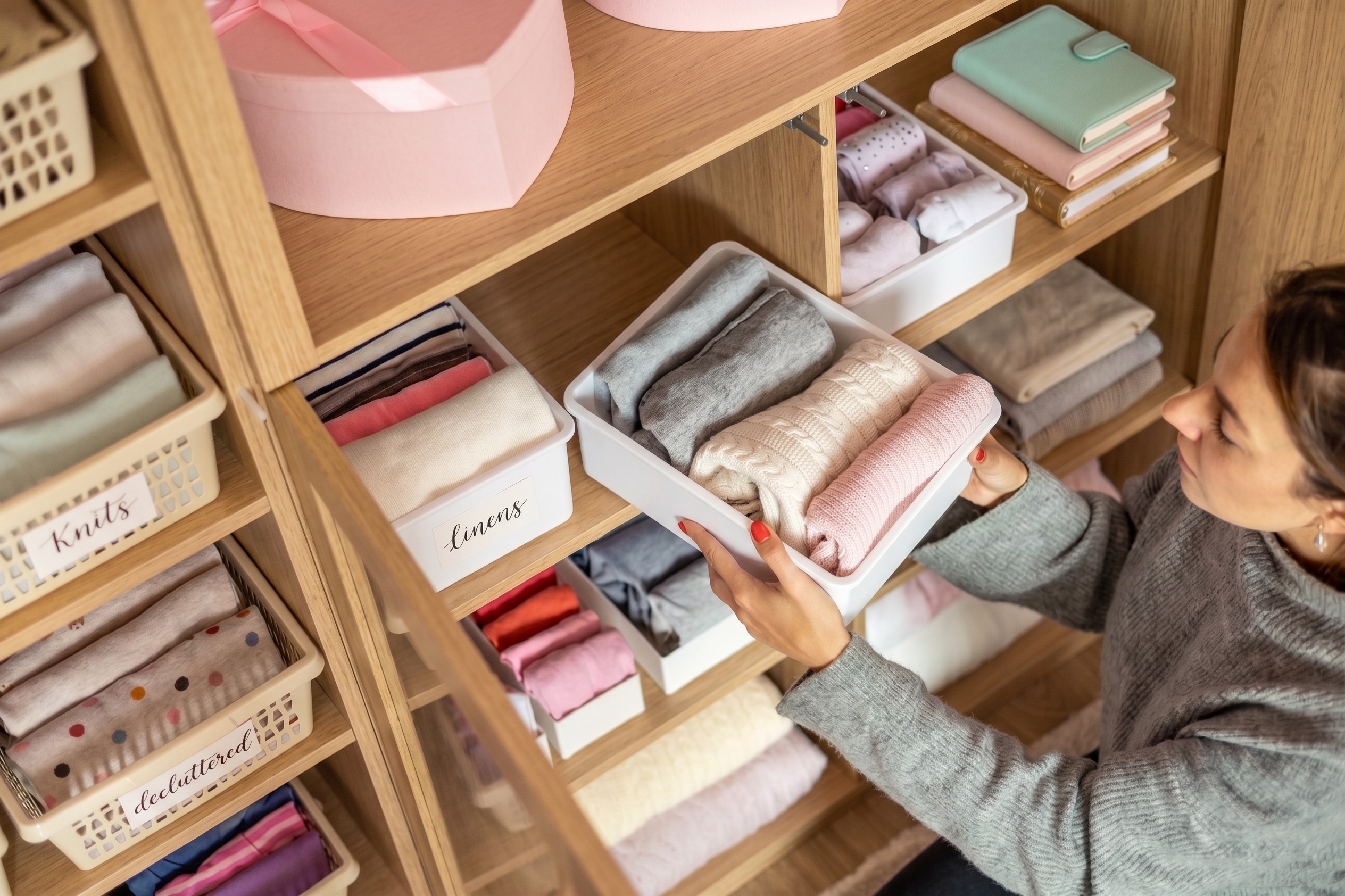
Maximize Every Square Inch with Space-Saving Systems and Streamlined Layouts
SEPT 21, 2026
Homes across Kirkland, Bellevue, and Redmond come in a lot of shapes — from newer builds with generous primary suites to older Eastside homes and condos where closet space was clearly an afterthought. If you’re working with a smaller footprint, the good news is that closet function has very little to do with square footage. It’s almost entirely about how the space is used. Here’s what actually moves the needle.
Most small closets are underused from about eye-level up. A single hanging rod leaves a huge amount of vertical space empty above and below it. Adding a second, lower hanging rod for shorter items (shirts, folded pants on hangers) effectively doubles your hanging capacity without any structural changes. Shelving above the top rod is prime real estate for bins holding out-of-season items or things you access infrequently.
Related to the point above: not everything needs full-length hanging space. Shirts, jackets, and folded bottoms only need about half the vertical drop that dresses and long coats do. Splitting a closet into a double-hang zone and a single long-hang zone (for dresses, coats, robes) is one of the highest-impact changes you can make in a small space, and it doesn’t require any tools.
The inside of a closet door is one of the most overlooked pieces of real estate in a small home. An over-the-door organizer can hold shoes, accessories, or cleaning supplies — freeing up floor and shelf space for things that actually need to be visible.
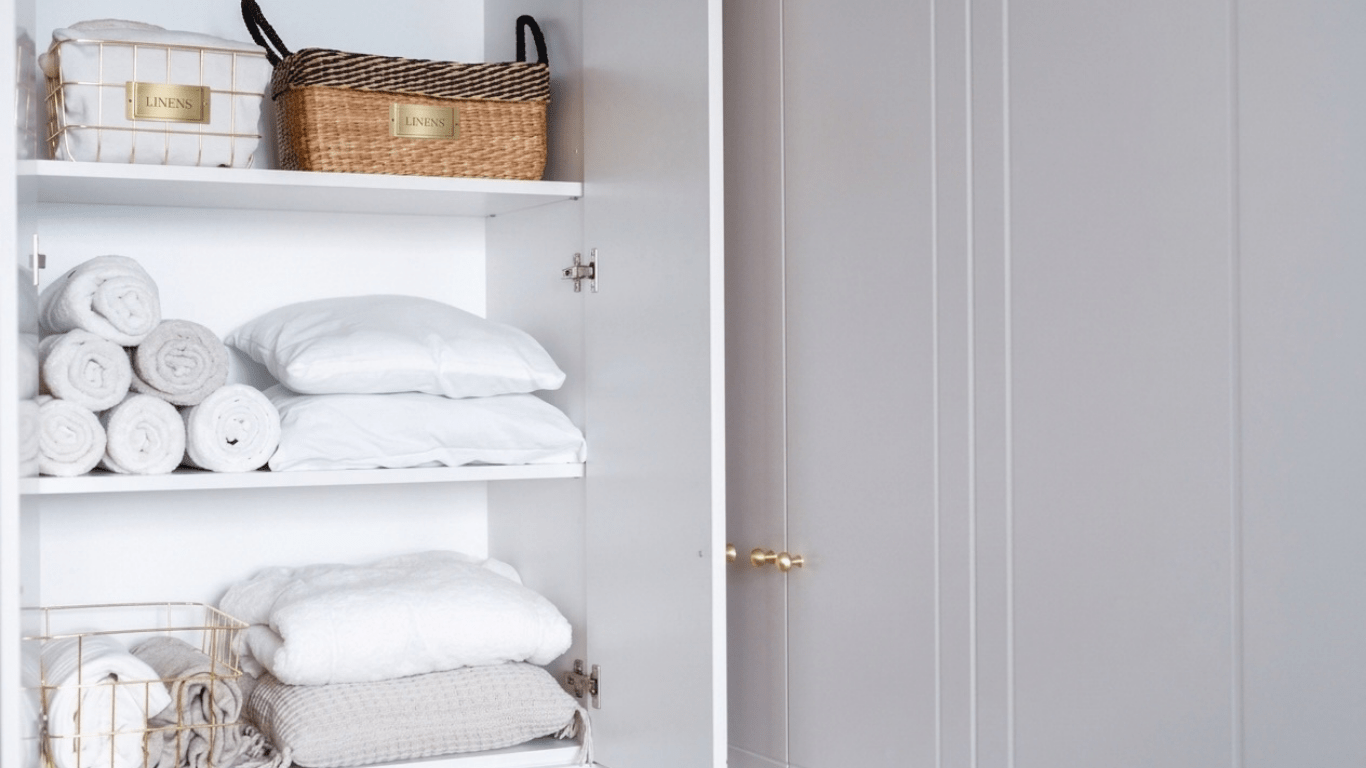
Floor space in a small closet disappears fast. Shoe racks, slim drawer units, and stackable bins keep the floor clear, which does two things: makes the closet easier to actually use, and makes it look considerably bigger, since visual clutter at floor level is one of the biggest culprits in a closet feeling cramped.
This sounds obvious, but it’s the step most people skip. Before buying any organizing product, take stock of what’s actually going in the closet — how many folded items versus hanging items, how many shoes, how many accessories. A closet built around a generic “ideal” system often wastes space; one built around your actual inventory rarely does.
It’s a small change with an outsized visual effect: switching to a single, slim hanger style (velvet or thin wood, matched in color) instantly makes a packed closet look organized, even before anything else changes. Mismatched wire, plastic, and wooden hangers of different widths eat up extra rod space and create visual noise.
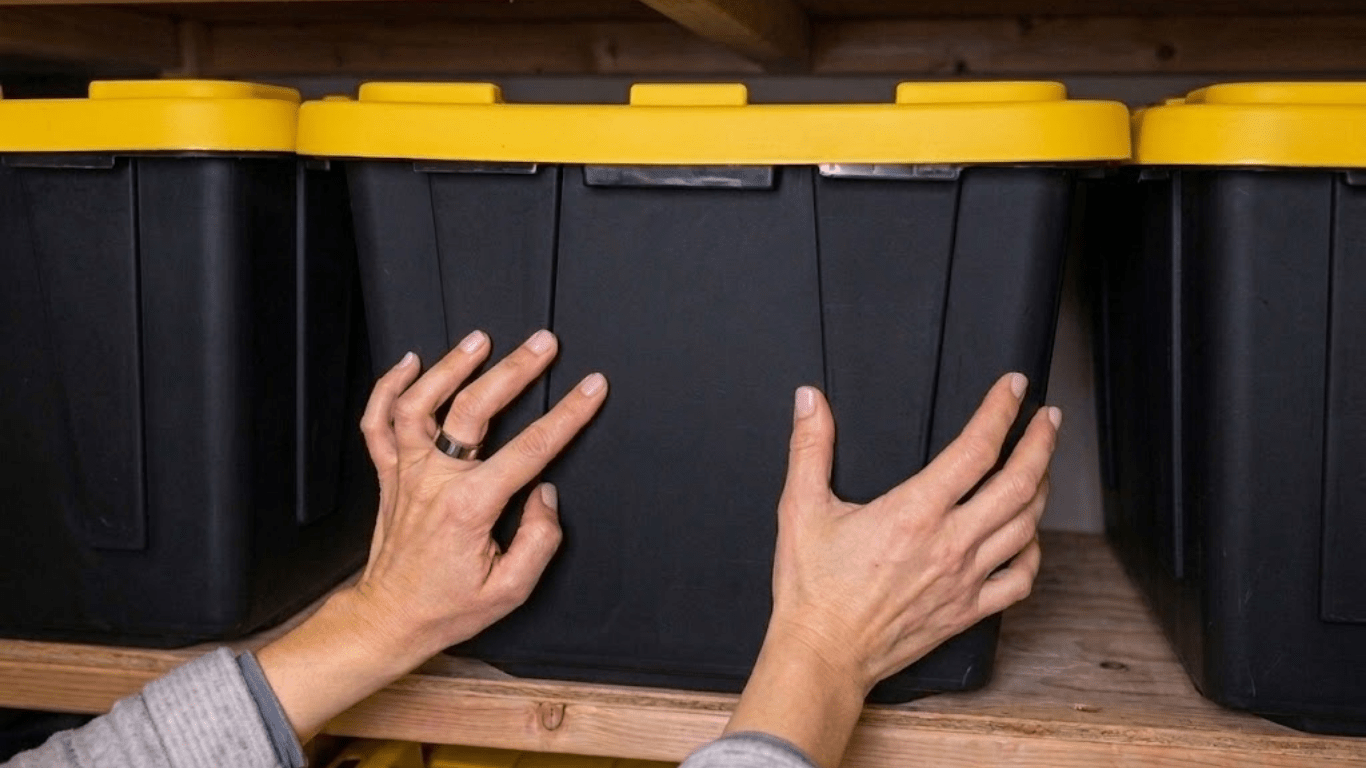
In a small closet, trying to keep every season’s wardrobe accessible at once is often what causes the overcrowding in the first place. Storing out-of-season items in labeled, under-bed or top-shelf bins — and swapping them twice a year — keeps the everyday closet realistic in size and easy to actually use.
It might seem unnecessary for a closet you use daily, but labels matter even more in tight spaces, since there’s less room to visually scan and remember what’s where. A quick label system saves time every single morning.
Some Eastside homes — particularly older builds — have closets that are genuinely undersized for a modern household’s needs. In those cases, no amount of bins fully solves the problem, and a custom closet system (built-in shelving, a redesigned rod layout, or a full reconfiguration) is worth the investment. This is exactly the kind of project we design every day: custom closet systems built specifically for how compact Eastside layouts are actually used, not a one-size-fits-all template.
Working with a tight closet? See our custom closet organizing services or book a consultation to talk through what’s possible in your space.
Serving Seattle, Kirkland, Bellevue, Redmond, and the Greater Eastside.
We use cookies to improve your experience on our site. By using our site, you consent to cookies.
Manage your cookie preferences below:
Essential cookies enable basic functions and are necessary for the proper function of the website.
These cookies are needed for adding comments on this website.
Statistics cookies collect information anonymously. This information helps us understand how visitors use our website.
Google Analytics is a powerful tool that tracks and analyzes website traffic for informed marketing decisions.
Service URL: policies.google.com (opens in a new window)
You can find more information in our Cookie Policy and .